AI for Biology
AI and computational methods that link proteomics to protein structure and function, and accelerate modeling and discovery.
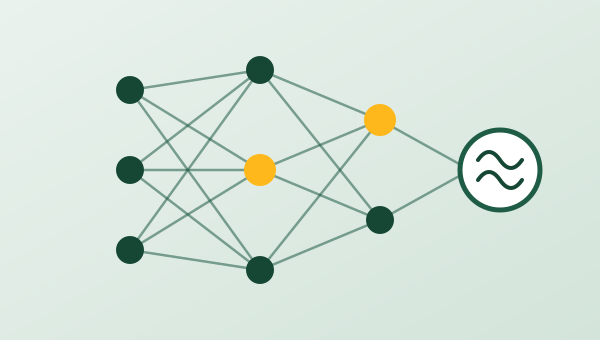
We develop AI and computational methods that make the rest of our work faster and more scalable: tools that connect proteomics data to protein structure and function, methods that make large models tractable to simulate, and automation that shortens the cycle between modeling and experiment.
Selected work:
- ProteoMeter, a pipeline that integrates multi-PTM and limited proteolysis data to reveal modification–structure coupling at the residue level (NAR Genomics and Bioinformatics, 2026).
- ProCaliper, for functional and structural analysis, visualization, and annotation of proteins (Bioinformatics Advances, 2025).
- Aggregation methods for quantifying PTM and structural changes in bottom-up proteomics (J. Proteome Research, 2026).
- A review of how artificial intelligence is transforming post-translational modification research (Bioengineering, 2025).
- Decomprolute, a benchmarking platform for multi-omics–based tumor deconvolution (Cell Reports Methods, 2024).
- Hypergraph models of biological networks to identify genes critical to pathogenic viral response (BMC Bioinformatics, 2021).
- Scaling methods for accelerating kinetic Monte Carlo simulations of chemical reaction networks (J. Chem. Phys., 2019).
Applications: tumor deconvolution in cancer, and host responses to viral infection.
TODO (Song): add current projects, collaborators, and funding.
People
- Song Feng — Assistant Professor & Principal Investigator